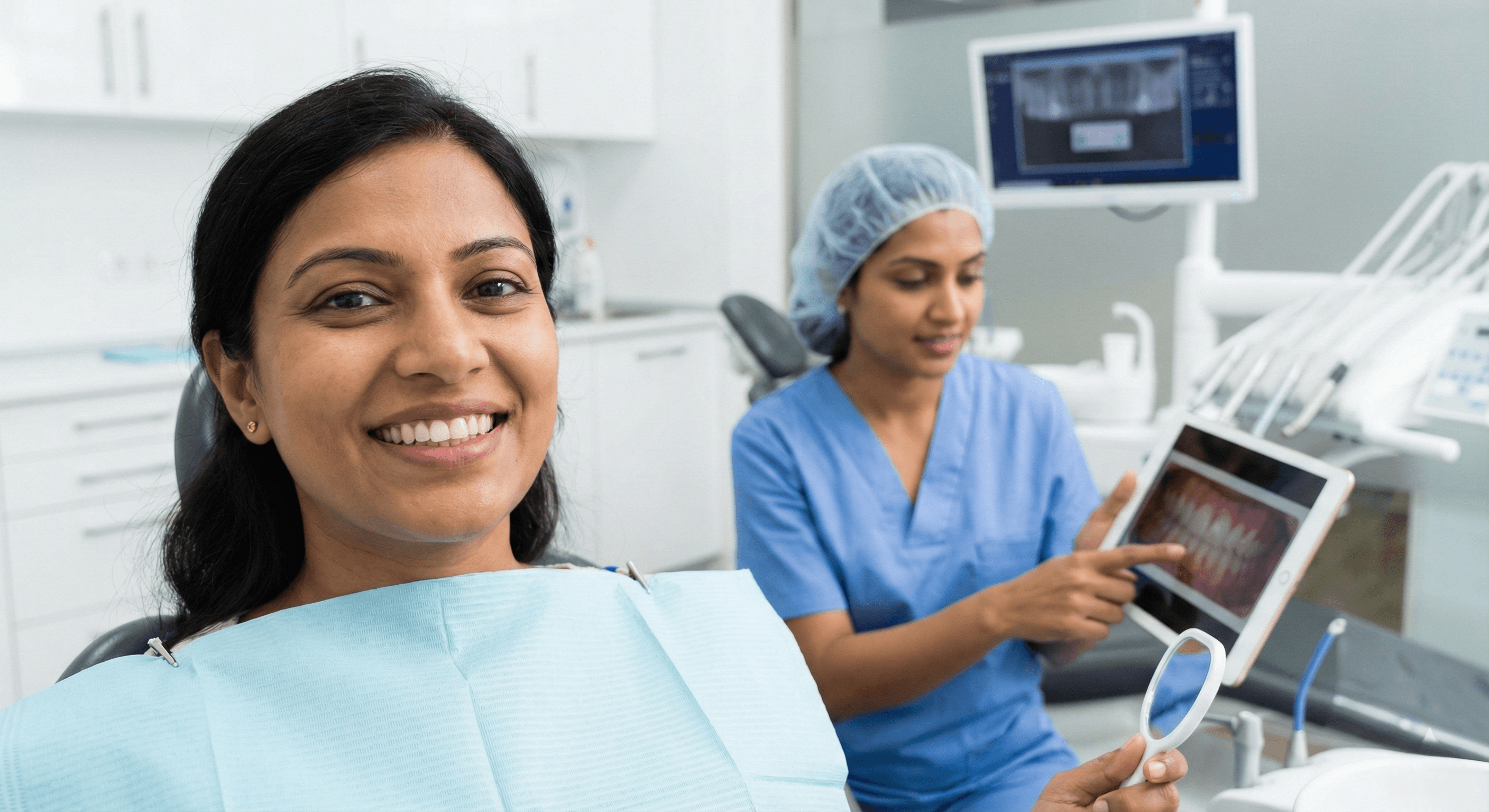
Losing one or more teeth can affect much more than your smile. Missing teeth may make chewing difficult, affect speech, alter facial appearance, and gradually contribute to changes in the surrounding teeth and jawbone. Fortunately, modern dentistry offers reliable tooth replacement options, with dental implants and dentures being two of the most widely used solutions.
But which option is better: dental implants or dentures?
The answer depends on several factors, including the number of missing teeth, jawbone condition, oral health, lifestyle, budget, and long-term treatment goals. At Anandbagh Dental Hospital, patients can receive a detailed dental evaluation to determine which tooth replacement option is most appropriate for their individual needs.
What Are Dental Implants?
Dental implants are artificial tooth roots, typically made from biocompatible titanium, that are placed into the jawbone to support a dental crown, bridge, or implant-supported denture.
Once the implant integrates with the surrounding bone through a process called osseointegration, it can provide a stable foundation for replacing missing teeth.
Dental implants can be used for:
Replacement of a single missing tooth
Multiple missing teeth
Implant-supported bridges
Implant-supported dentures
Full-arch tooth replacement
Because implants are anchored into the jawbone, they can provide a more stable and natural-feeling alternative to removable dentures in suitable patients.
What Are Dentures?
Dentures are removable dental appliances designed to replace multiple missing teeth or an entire arch of teeth. Depending on the patient's needs, dentures may be partial or complete.
Dentures can help restore:
Basic chewing function
Speech
Facial support
Smile appearance
Overall oral function
Modern dentures are designed to provide improved comfort and appearance compared with traditional designs. However, because conventional dentures rest on the gums rather than being fixed directly into the jawbone, some patients may experience movement while eating or speaking.
Dental Implants vs Dentures: Key Differences
Stability
Dental implants are secured within the jawbone, providing strong support and stability. Conventional dentures are removable and may move slightly, particularly if the fit changes over time.
Appearance
Both options can be designed to provide a natural-looking smile. Dental implants, however, can closely replicate the appearance and function of natural teeth because they are supported from within the jaw.
Comfort
Implants generally feel more like natural teeth once treatment is completed and the tissues have healed. Dentures may require an adjustment period, particularly when patients are using them for the first time.
Jawbone Preservation
One important difference is their effect on the jawbone. Dental implants can help stimulate the bone around the implant site, potentially helping to reduce bone loss following tooth loss. Conventional dentures do not provide the same type of stimulation.
Maintenance
Dental implants are cared for similarly to natural teeth, with regular brushing, flossing or interdental cleaning, and professional dental check-ups. Dentures require daily cleaning and should be handled and maintained according to the dentist's instructions.
Treatment Time
Dental implant treatment usually involves multiple stages and requires adequate healing and bone integration. Dentures can generally be fabricated and provided more quickly, depending on the patient's clinical situation.
Cost
The initial cost of dental implants is generally higher than conventional dentures. However, implants are designed as a long-term tooth replacement solution and may offer significant functional and lifestyle benefits over time. Dentures can be a more economical option for patients seeking removable tooth replacement.
Are Dental Implants Better Than Dentures?
There is no single tooth replacement option that is best for everyone.
Dental implants may be preferable for patients who want a stable, fixed tooth replacement and have sufficient bone support and suitable overall oral health. They can provide excellent function and may help preserve the jawbone.
Dentures may be appropriate for patients who require replacement of several or all teeth and prefer a removable solution. They can also be considered when certain medical, anatomical, financial, or treatment-related factors make implants less suitable.
In some cases, implant-supported dentures can provide a middle ground by combining the removable nature of dentures with the additional stability provided by dental implants.
Which Option Is Right for You?
Choosing between dental implants and dentures should not be based solely on cost or appearance. A dentist needs to evaluate your teeth, gums, jawbone, bite, oral hygiene, and overall treatment requirements.
At Anandbagh Dental Hospital, a comprehensive dental examination can help determine whether dental implants, conventional dentures, partial dentures, or implant-supported dentures are suitable for you.
Your dentist may consider:
Number and location of missing teeth
Jawbone quantity and quality
Gum health
Remaining natural teeth
Bite and chewing pattern
Oral hygiene
Medical and dental history
Treatment expectations
Long-term maintenance
Budget and treatment preferences
Why Choose Anandbagh Dental Hospital for Tooth Replacement?
Replacing missing teeth requires careful planning and personalized treatment. Anandbagh Dental Hospital focuses on evaluating each patient's individual dental condition before recommending a suitable tooth replacement solution.
Whether you are considering dental implants, dentures, partial dentures, or implant-supported tooth replacement, professional assessment can help you understand the benefits, limitations, treatment process, and expected outcomes of each option. If you have missing teeth and are unsure whether dental implants or dentures are right for you, consult a dental professional for a personalized evaluation.
The best choice depends on your oral health, jawbone condition, number of missing teeth, lifestyle, expectations, and treatment goals. A professional consultation at Anandbagh Dental Hospital can help you make an informed decision about restoring your smile and chewing function.

 Blogs Category